
Powering Your Hearing Journey: Rechargeable or Traditional?
Here at Audiology, Inc., we understand that your hearing devices are an important part of your daily life, seamlessly fitting into everything you do.
Today’s innovative hearing solutions are designed to deliver reliable, lasting performance that matches your unique routine.
We’re here to help you explore the convenience of modern rechargeable technology or the familiar ease of traditional batteries, so you can make the choice that feels just right for you.
Let’s take a closer look at both options to help you decide which supports your hearing goals best.
Why Choose Rechargeable Hearing Aids?
Rechargeable hearing aids feature built-in lithium-ion batteries, the very same dependable technology you trust in your smartphones and electric vehicles.
With this option, instead of handling small batteries every few days, you simply place your hearing aids in their charging station each night. By morning, you’re ready for a full day of clear, confident hearing.
Key advantages you’ll appreciate:
Rechargeable hearing aids are often an ideal choice if you appreciate ultimate convenience, find handling small items challenging, or simply prefer fewer day-to-day maintenance steps. They also offer wonderful peace of mind, eliminating the worry of running out of power when you’re out and about — a small change that can make a big difference in how you experience your day.
And the good news is, even our smaller, more discreet styles are now available in rechargeable versions!

Why Traditional Battery-Powered Hearing Aids Remain a Popular Option
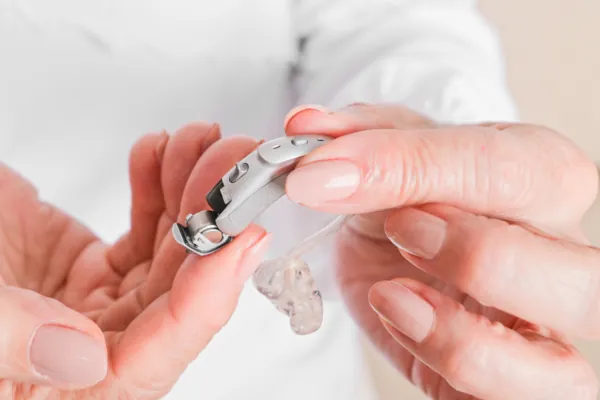
For many in our community, replaceable batteries continue to be a practical and straightforward choice.
These devices use small, reliable zinc-air batteries that are easy to change and readily available at nearly any local pharmacy.
Key benefits you’ll find valuable:
Battery-powered hearing aids are a great fit for those who prefer a more hands-on approach or appreciate the simplicity of immediate power. Plus, every style, especially the most discreet, smallest models, is still widely available with traditional battery operation.
How Simple Is It to Replace a Hearing Aid Battery?
We assure you: It’s quite straightforward!
First, it helps to know there are four common sizes, each with a distinct color code for easy identification: 10 (yellow), 312 (brown), 13 (orange), and 675 (blue). Matching your device to the right package is a breeze when you need to restock.
Changing your battery is a simple process:
1
Gently open the battery door on your hearing aid.
2
Carefully remove the old battery and dispose of it responsibly.
3
Peel the sticker off your new battery — this activates it by allowing air to enter.
4
Wait 3 to 5 minutes before inserting it, allowing the battery to fully activate.
5
Close the battery door. Your hearing aid will power on automatically.
Typically, disposable batteries provide 3 to 7 days of power, depending on your hearing aid’s features, how much you stream audio, and the battery size.
Expert Tips for Getting the Most From Your Disposable Hearing Aid Batteries
As your trusted community audiologists, we have a few simple habits that can help your hearing aid batteries last longer and keep your devices performing reliably:
Which Option Is Right for Your Lifestyle?
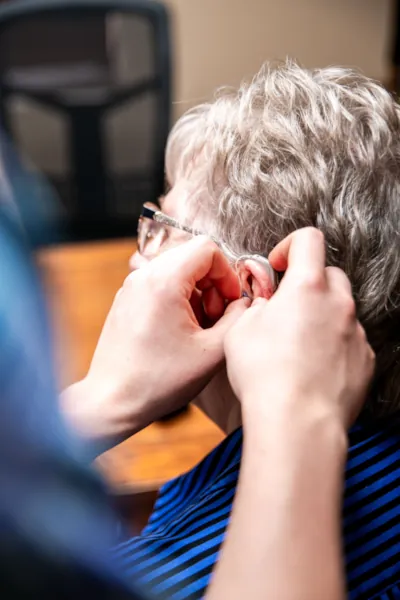
The best choice truly depends on your individual lifestyle, priorities, and dexterity. During your personalized hearing evaluation here at Audiology, Inc., your provider will take the time to compare models with you, discussing how each one sounds, feels, and fits into your daily life.
Whether you ultimately choose advanced rechargeable technology or reliable battery-powered options, what matters most is that you hear confidently, clearly, and comfortably as you live your life.
Frequently Asked Questions
Ready to Find Your Perfect Fit?
We’re your local experts, dedicated to your hearing care journey. Contact Audiology, Inc., today to schedule a hearing consultation and discover which hearing aid power option truly supports your goals and your unique Eastern Arizona lifestyle.